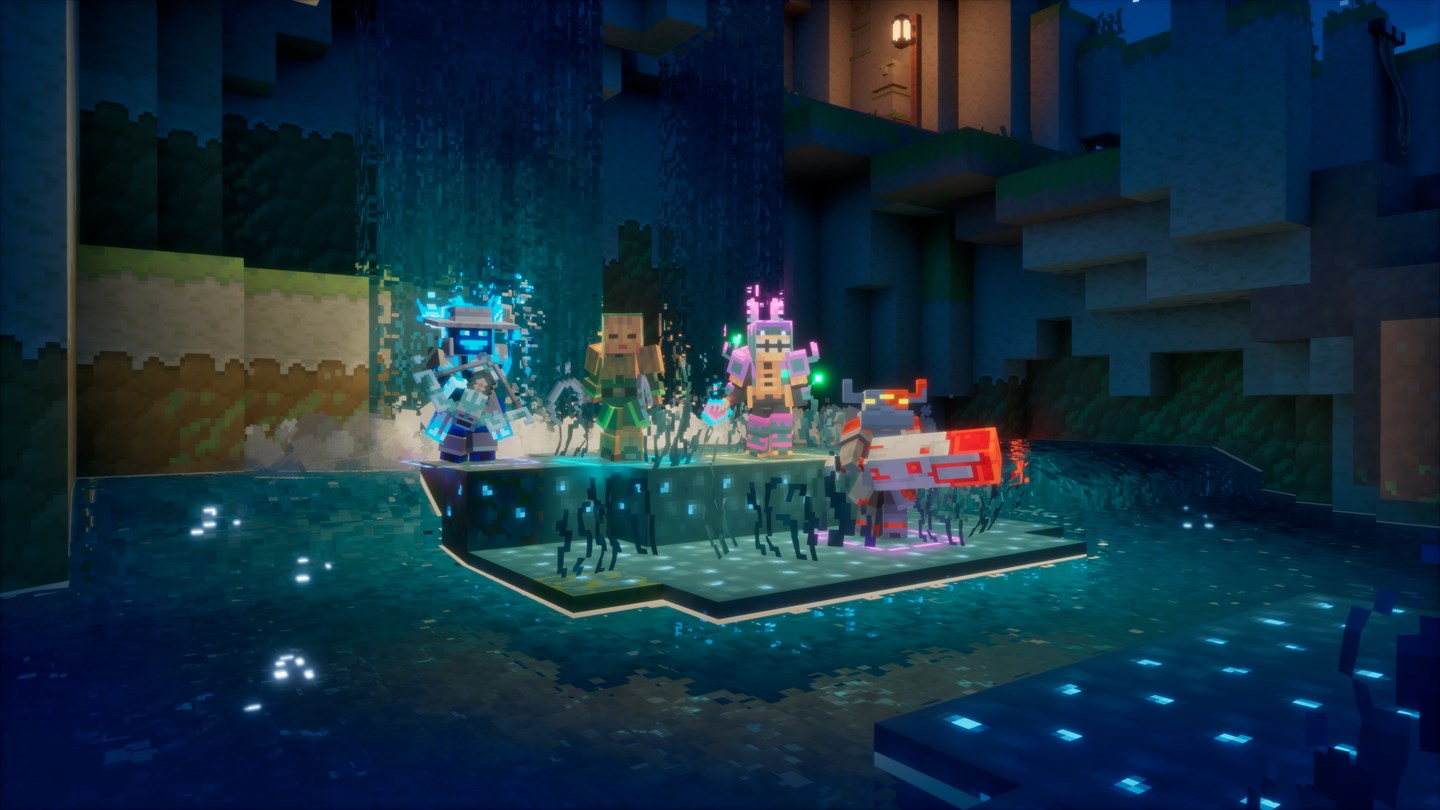
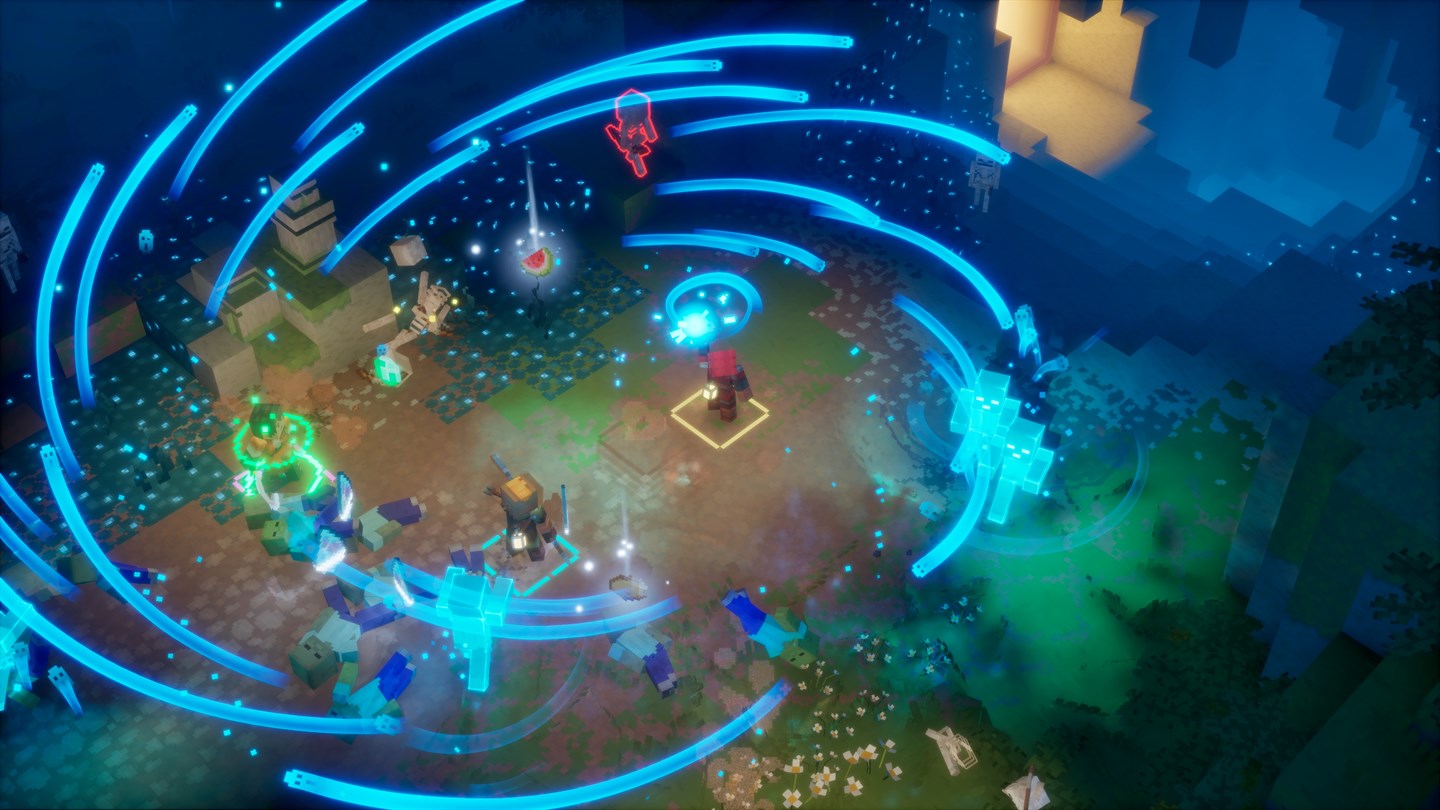
The sequel is easiest to recommend as an approachable co-op action RPG. Its movement, armor, and Sift additions improve the formula, while launch depth remains lighter than a systems-heavy ARPG.
US$29.99 Standard
About seven-hour story
Co-op strength
Light launch endgame
Fact-checked
Build identity comes from equipped weapons, armor pieces, enchantments, and artifacts rather than a permanent class.
Verdict first
The short verdict
Buy or download Minecraft Dungeons II for friendly co-op and accessible loot progression—not for a deep forever-game at launch. Jumping, jump attacks, four armor slots, expanded enchantments, and The Sift improve the first game’s foundation. The tradeoff is a compact story and an endgame that currently leans on harder variants, optional dungeons, boss replays, and loot repetition.
Strong fit
A 2–4 player group that wants fast setup, readable combat, colorful loot, and flexible roles without class spreadsheets.
Good solo fit
A player who likes exploring every branch and changing weapons often, but does not need a long story.
Wait for updates
A player whose main goal is a deep endgame economy, complex skill trees, or months of highly varied farming.
Use Game Pass first
Anyone unsure whether the simple combat loop will remain interesting after the campaign.
Decision scorecard
Best audience
Families, Minecraft fans, and co-op groups wanting a readable action RPG
Campaign context
A launch review reported roughly seven hours for the main story
Strongest addition
The Sift plus broader movement and equipment choice
Main limitation
Buildcraft and launch endgame are lighter than deeper ARPGs
Safest purchase
Standard Edition or an eligible Game Pass plan
Deluxe value
Cosmetics now and DLC 1 & 2 as released
What Minecraft Dungeons II does well
The clearest strengths
Co-op flexibility: official listings support couch, online, mixed, matchmaking, and cross-platform play for up to four.
Readable action: fewer permanent build commitments make it easy to swap gear and help a new player.
Better movement: the jump button and jump attack add routes and combat decisions missing from the original.
More equipment texture: four armor slots and broader enchantment combinations produce more frequent upgrade choices.
The Sift: a visually distinct, soul-powered dimension gives the sequel its clearest new identity.
Soul-focused equipment rewards a deliberate loop of gathering energy and spending it at the right moment.
What may disappoint you at launch
Know these limits before buying
The main story is compact; IGN’s launch review described a roughly seven-hour campaign.
Roles remain equipment-driven, so early drops can decide how a hero plays more than a long-term plan does.
Combat is intentionally approachable and can feel repetitive if you want complex rotations or skill trees.
Soul Storms, optional dungeons, boss replays, side quests, and enchantment unlocks form the launch endgame, but the activity variety is limited.
Deluxe promises DLC 1 & 2 as released; it does not make the launch campaign longer immediately.
Choose once
Standard, Deluxe, or Game Pass?
Choose by risk and expected playtime
Option
Best for
Skip when
Standard · US$29.99
Players who want the complete base game and may decide on DLC later
You already have an eligible Game Pass plan.
Deluxe · US$49.99
Committed players who value the four skins, Soul cape, Blub pet, and both announced DLC packs
You mainly want the campaign and are unsure about returning.
Game Pass
Players who want to test the combat loop or play a short co-op campaign
You want permanent ownership outside the subscription.
Steam Deluxe Upgrade · US$19.99
Existing Steam base-game owners who decide they want the Deluxe extras